If you want to read more of my writing, I send out the occasional newsletter. Sign up here:
Tag Archives: Colorado writer
Losing Your Hair Sucks Worse Than My Six-Year-Old Walmart Vacuum
Here’s something I’ve learned in the past two weeks: When your body suffers through a brutal illness and you nearly die, your hair can decide, weeks later, to give up the ship, too. And while I am super-thrilled to be alive and all,* I’m a little bummed to be dealing with rapid (and I mean as rapid as a cat with its tail on fire) hair loss.
It began about two weeks ago. I woke up in the morning to find my Snoopy pillow (don’t judge) covered in strands of hair. As in hundreds of strands of hair. As in horror-movie, something-has-gone-horribly-wrong strands of hair.
After my first reaction that involved the word, “mother” followed by one that rhymes with “trucker,” I decided it was surely a one-time kind of thing. Maybe a reaction to a new shampoo? A new medication? Karma for saying that one (tiny, rarely ever happens) mean thing to my husband last week?
But sadly, by the end of that day, I was literally holding huge clumps of my hair in my hands every time I touched my head. There may have been audible whimpering.
Can I mention right now that (especially) when you grew up in the Land of Big Texas Hair, this is a High-Alert Crisis Situation?
You see, I had good hair. Healthy, shiny, dark hair, just like my mama. It didn’t often frizz, even in Houston in June. It didn’t need straightening or perming (at least not since the 1980s). I hadn’t even thought about coloring any gray yet. It was damn good hair, people.
But now, after only two weeks, there’s not a lot of it left. I have actual bald spots. I have a legit comb-over. (Daddy, I understand now.)
The only options I have these days, since it’s too thin to be styled in any way, shape or form, are to push it all back with a headband like I used to when I was 12 and in love with Sean Cassidy, or wear a ball cap or beanie ski hat. All the time.
Luckily, the ball cap/ski hat thing works well enough in Colorado; women wear them everywhere here. And by everywhere I mean Target, REI and bike trails. (Headbands work better for the office, though, since a “Mama Tried,” stained cap doesn’t go that well with black palazzo pants and a fancy blouse.**)
I’m working with my doctor to turn this hair loss thing around, but she said it could take months for things to rebound. In the meantime, I’m going to try to picture myself as I remember my Granny when she’d wear her old faded John Deere cap, out in the sun, working cattle or planting okra: One tough broad you didn’t want to mess with before she had her second cup of straight-up black coffee.
Also, at this point in time, I’d like to apologize in writing to every one of my friends who has ever had to go through chemo. Remember how I used to advise you not to worry about losing your hair? How I said it was just hair?
I was wrong and you can slap me next time you see my balding head.
* Thank you, Little Baby Jesus.
** Who am I kidding? I wear jeans and boots to work most days.
PS: Are you offended by the word, “sucks?” Don’t be! Here’s why.
If you want to read more of my writing, I send out the occasional newsletter. Sign up here:
The Best Margarita Recipe, Taste-Tested and Texan-Approved
When you’re from Texas, three of the four main food groups are lime, tequila, and salt. (The fourth is straight-up enchiladas.) Suffice it to say that I’m no stranger to the sweet-tart heaven of a margarita done right. (The main character in my novel Blue Straggler isn’t, either.)
I’ve had margaritas made with sweet-and-sour mixes. I’ve had margaritas made with Lone Star beer. I’ve had blue margaritas and strawberry margaritas and cucumber margaritas and prickly pear margaritas. I’ve enjoyed frozen margaritas, swirled-with-sangria margaritas and on-the-rocks margaritas.
And they are not all, as they say, created equal.
In honor of the two-year anniversary of the publication of Blue Straggler by 30 Day Books, I’m sharing what I consider to be the best, simple margarita recipe on the planet.
Let me know if you agree!
The Blue Straggler Margarita
Run a juicy lime wedge over the rim of a cocktail glass and dip the rim of the glass in coarse sea salt.
In a bowl, whisk 1 tablespoon light agave nectar with 1 tablespoon filtered water and 1½ tablespoons freshly squeezed lime juice.
Pour the nectar mixture, along with 1/3 cup 100-percent blue agave tequila, into a shaker. (Do not settle for cheap college-days tequila. You’re a grown up!)
Add ice and shake.
Pour liquid only over fresh ice in your salt-rimmed glass. Add a final squirt of lime on top and drop the wedge into the drink.
Sip while listening to the Marty Robbins’ song, El Paso, or Down on the Rio Grande by Johnny Rodriguez.
If you want to read more of my writing, I send out the occasional newsletter. Sign up here:
My Favorite Reads of 2013
———————promotional note——————–
Not sure how to avoid plagiarism? Use Grammarly because while orange may be the new black, nobody looks good in it.
—————————————————————–
Before pneumonia took me down in December, I would consider 2013 a banner reading year for me. Mostly because, perhaps unfortunately, I wasn’t writing much fiction myself. Which is just fine. Because sometimes writers need to spend a long time soaking up the words others have written to get back to the reason we write in the first place.
I didn’t keep track, but I’m sure I read at least 100 books — some fiction, some nonfiction. And here are five of my favorites.
1. Tenth of December by George Saunders. This collection of short stories is literary perfection. Every word, every phrase, every sentence, every character, and every story seems to have meaning far beyond the first that comes to mind. It’s definitely a thinker’s story collection and not for anyone who wants a light, airy read. It’s honest and brutal and moving, and it’s one of those books that stays with you long after you’ve read it. It’s oh so good. It’s one I will buy in hardcover after having read it twice on my Kindle. This should be required reading for all writers of fiction. Maybe all writers in general. Maybe all readers.
2. Great Colorado Bear Stories by Laura Pritchett. I’ve been a fan of Laura’s since her first collection of short stories, Hell’s Bottom, Colorado. And I’m also very interested in bears, since I have lived among them in the Colorado mountains for 12 years now. But I think anyone who is curious about wildlife, and the interaction between humans and wildlife, will enjoy it. The book is full of nonfiction research and first-hand accounts of bear encounters. It’s written in a way that engages and makes what could be a dry topic instead a book I couldn’t put down. If you like Craig Childs’ work, you’ll enjoy this book.
3. Dirty Love by Andre Dubus III. Another fiction collection, this one touted as “four not-quite-novella-length stories.” I absolutely loved these stories, all of them about relationships and people who are on the cusp of something. The stories hurl you into the characters’ minds so completely that you truly care about them, even with all their flaws, and, in comparison to Saunders’ work, you don’t even think about the words or language used. You just HAVE to know what happens to these people. (However, the writing is near brilliant, too.) I’d love to see any of these stories made into a full novel. If you liked House of Sand and Fog by Dubus, you’ll enjoy this collection.
4. Judging a Book by Its Lover: A Field Guide to the Hearts and Minds of Readers Everywhere by Lauren Leto. This was a fun, nonfiction keeper. It’s from the woman who cofounded the humor blog, Texts From Last Night, while she was in law school. But the book grew out of her other blog (no longer up, I don’t think) called Book Porn. This book is hilarious, particularly for college English majors and all-around book nerds like me. Here’s how the publisher described it, and I agree: “… [It’s] like a literary Sh*t My Dad Says—an unrelentingly witty and delightfully irreverent guide to the intricate world of passionate literary debate, at once skewering and celebrating great writers, from Dostoevsky to Ayn Rand to Jonathan Franzen, and all the people who read them.”
5. Hyperbole and a Half: Unfortunate Situations, Flawed Coping Mechanisms, Mayhem, and Other Things That Happened by Allie Brosh. Another blogger turned book-writer, Brosh got her book deal based on her blog, Hyperbole and a Half. So be sure to check out the blog to see if you can handle her type of writing, which is a hybrid form of words and illustrations and more words. But mostly, it’s hilarious. And insightful. And true. Not just to her life, but probably to your own. My favorite chapters were the ones where she delves into the minds of her dogs (so funny!) and the ones where she describes depression for those who have never experienced it (spot on.)
What was your favorite read of 2013?
If you want to read more of my writing, I send out the occasional newsletter. Sign up here:
7 Things People Don’t Tell You About Pneumonia
While many of you might’ve thought I have been on a hiatus due to winning the lottery and spending the past month enjoying my new home in Italy, I’ve actually just been sick. Really, really sick. How sick, you ask? So sick that I couldn’t even read. THAT sick.
You see, I went home to Texas for a quick, early Christmas visit with family in mid-December and came back with the worst gift ever: H1N1 flu. (That’s the swine one, in case you didn’t know.)
It’s an evil, evil virus, folks. As in fetal position for six days. And then for me, it quickly turned into pneumonia, with a side of kidney and liver failure. I spent many days in the hospital. Christmas and New Year’s never happened, really.
Basically, you know those stories you read in the newspaper about previously healthy people who get the flu and die unexpectedly? Well, that was ALMOST me. I was one of the lucky ones who pulled through. (And for inquiring minds, I didn’t get my flu shot. I usually do, but I kept putting it off because our whole household had been sick with one thing or another since Halloween. I was waiting until my immune system had rebounded. Big, huge mistake.)
It’s been two weeks since I got out of the hospital now, and I’m still on oxygen. Which makes me feel about 90 years old, and is something that I never dreamed I’d need in my 40s.
Here are a few other things that no one ever told me about pneumonia.
1. When you are in the throes of pneumonia, before the antibiotics start to kick in, every time you cough, you will feel as though someone is reaching down through your lungs and pulling out your soul. And the sound will be violent. Horribly violent.
2. If you have pneumonia but don’t know it yet, the whole not-being-able-to-breathe thing can catch you off-guard. At one point, my lips and fingernails turned blue from not enough oxygen. I didn’t know it though because I was lying in the dark, clutching my chest and stomach. When my husband did realize it, that’s when we called the ambulance.
3. Once your lungs fill up with bacteria-laced fluid, it takes a long, long time to get them back to normal. I thought once I’d completed the high-powered antibiotic regimen, I’d be home free. Nope. It can take weeks and sometimes months for you to get a clear chest x-ray. I’m still waiting for mine.
4. In addition to your lungs, it takes a long time for your whole body to get over pneumonia. I didn’t believe that at first. When the doctors told me I’d need another two to three weeks off of work, at least, to recover, I scoffed. I now take back my scoffing.
5. Pneumonia is as much about fatigue as it is about fluid on your lungs. And when I say fatigue, I mean bone-tired fatigue. It’s the kind of fatigue where, in the beginning, taking a shower takes every ounce of energy you have. The kind of fatigue where, I promise you, you will not have what it takes to shave your legs for weeks. Because it’s just too much.
6. Pneumonia jacks up your sleep patterns. You see, you spend so much time in the beginning coughing your head off that you can’t sleep. Not a wink. Then, if you end up in the hospital, too, there’s no sleeping there, either, because they’re busy taking your blood and your vitals and changing your IV 24 hours a day. So you end up going home, an exhausted insomniac who takes a few short naps during the day and stares at the ceiling, pondering the meaning of life all night.
7. Pneumonia can bring you and your spouse closer together. You wouldn’t think this would be true. After all, odds are he has now seen you at your complete and utter worst. He may or may not have had to wash your hair when you didn’t have the energy. He may or may not have had to clean up bio-hazmat things and help you on and off the toilet when you were at your most frail. And let’s face it, there is no way to rock an oxygen tube in your nose. But for us, we’re closer. Because I am usually always in control. And now I wasn’t. He had to step up and take care of me at a very basic and raw level. I couldn’t have made it through this without him. And he almost lost me forever. These kinds of things create a different bond than we had before. And so far, it’s a good one.
Have you ever had H1N1 and/or pneumonia? What’s been your experience?
If you want to read more of my writing, I send out the occasional newsletter. Sign up here:
The Magic of Second Chances
Following is an essay I wrote a few years back that was eventually published in the Chicken Soup for the Soul series. A version of it also placed in a Real Simple magazine essay contest. I’m pleased to share a shortened version of it here for my blog readers.
The Magic of Second Chances
Years of disappointing infertility treatments can leave you feeling raw inside — like an asphalt-skinned knee or that tender place beneath an ugly blister when you peel the outer layer away. It was the kind of open wound that drove me to crazy acts, like directing daggered looks at women shopping for baby wipes and absurdly mean, fortunately silent, comments toward unsuspecting pregnant women at the mall.
What got me through those ugly days, and what served as a bandage over that intense rawness, was this: There remained a tiny degree of hope that the next month could be different — that this time, the moon and the stars and my body would all magically align to give me what I wanted most in the world, a baby.
But unfortunately, celestial magic, and pregnancy, continued to elude me. Procedures weren’t working. Finally, our doctor called one day in the spring to say she recommended no further treatments, no further procedures. Statistically, I had a much better chance of winning the lottery — twice — than giving birth.
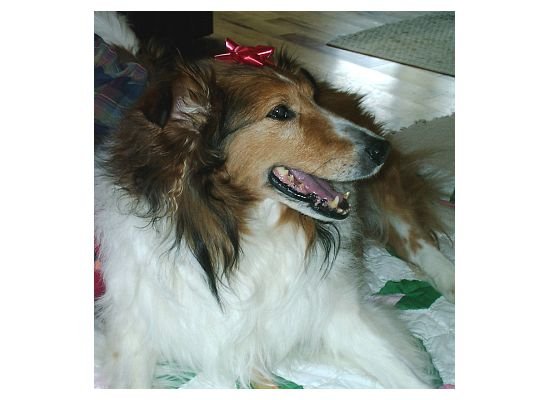
That evening, with my husband out of town, I curled up on the couch with our collie at the time, George Bailey. He rested his long, Lassie-nose on my leg. He’d already secretly enjoyed the pint of butter pecan ice cream I’d opened but couldn’t eat. And now he looked concerned about the growing pile of used tissues at our feet.
I rehashed the conversation with the doctor in my head, searching for something, anything, that might offer a hint of optimism. But there was nothing I could hold on to this time. And her last words tumbled through my thoughts again and again. “Honestly, if I were you, I’d consider adoption.”
Adopting a child? It wasn’t that we didn’t think it was a good idea. We thought it was great — for other people. I think in some ways, saying “adoption” out loud would’ve meant some kind of defeat to us — an acknowledgement that perhaps we might not, in the end, conceive. And that wasn’t something we could let ourselves believe.
But now, the world and everything in it was upside down and strange. I was no longer a woman who would someday see the outline of our baby’s spine on an ultrasound image. I was no longer a woman who would learn Lamaze, who would fret over whether or not to hire a mid-wife, who would ask friends for their hand-me-down maternity clothes. Even our home in the Colorado mountains seemed empty and cold, the clouded moon outside more scarred than before.
I looked down at George Bailey, our formerly abused, now reformed, sweet loyal canine companion. I wanted to make sure he hadn’t changed before my eyes, too. I ran my fingers through his soft, thick fur. I had to smile. George Bailey had served as a pillow, sounding board and heating pad in recent months. Now his tawny-tan coat was absorbing my tears.
We had adopted George from a rescue group two years before, his beat-up body complete with two broken legs. We’d brought him home around the holidays; the group had named him after the movie, It’s a Wonderful Life. Both Jimmy Stewart’s character and our George Bailey had been given a second chance at life.
George Bailey’s dark, almond eyes stared up at me as I stroked his ears. Adoption in his case had been an easy decision. We met him online and immediately wanted to give this bruised soul a happy, comfortable home. For George Bailey, though, becoming a part of our lives had been a leap of faith. Those almond eyes didn’t always reflect love and trust.
In the beginning, he was guarded. He literally did not make a sound for months. Finally, after a great deal of coaxing (not to mention treats) on our part, he decided to give us a chance. I imagine he had to overcome many doubts — and a lot of bad memories — to make that jump.
That’s when I decided maybe it was time for us to learn a little something from George Bailey. Maybe it was time for us to take our own kind of leap. In a new direction. Maybe it was my husband and me who needed a second chance.
I stayed up all night long, George Bailey sleeping at my feet, a crackling fire toasting the cabin and tossing shadows on the walls. I researched international and domestic adoption. I read blogs; I read adoptive child psychology reports. I read about state and federal laws, about laws in countries I had only previously thought of when reading ethnic restaurant menus.
That night of research set us on a journey that transformed our lives. Within a few months, we had settled on domestic adoption, worked on how we would fund the $30,000 bill. Within a few more months, we had completed our paperwork and passed our physicals and background checks. (Luckily, my pregnant-women-hating behavior never got out.)
By August, we were matched with a birthmother and birthfather who chose us to be the parents of their unborn child.
In early fall, we held our son when he was minutes old. We cried with the birthparents, for our shared happiness, for their loss. We told the birthparents we loved them. We meant it.
When we brought home our baby and introduced him to George Bailey, our collie seemed … proud of us.
Magic, it’s safe to say, no longer eludes us. Every day is filled with wild little-boy laughter and Dennis-the-Menace level schemes.
And we owe it all to my sweet and gentle George Bailey, who taught me how to put the hurt and doubt behind me — and leap.
If you want to read more of my writing, I send out the occasional newsletter. Sign up here:
A Walk and a Talk in the Mountains
I had the day off from work on Friday, and even though my husband and I were both still feeling sick from a Colorado Super Bug going around, I announced I was heading up to our cabin on the mountain. I needed to be there, to take one of my old walks that I took daily for more than a decade. It’s the same way I feel about Texas about twice a year, too. That driving need to be back in touch with some basic part of who I am.
My husband has been up to the cabin several times since we’ve moved, but I have stayed away. I knew I’d likely tie myself to a pine tree and he’d have to peel my arms away or chop down the tree to get me to leave. And frankly, it played out kind of just like that.
On our walk, we talked about moving back. It’s a tough thing, marriage. And parenting. You just never know for sure what the right move is. You can guess, and you can hope to high heaven you’re making the best choices. And then you can pick up the pieces and put them back together when they turn out to be the wrong ones.
I’m still not sure what we’ll do. I want to do what’s best for our son. His needs come first. But it’s all so murky, that determining what’s best.
Yes, it’s dangerous to live and drive up there on the mountain. The drive to school alone would be trying … about 50 minutes one way. And yet, I have to also believe that living in such a raw, untamed area would feed his soul, too. Right?
And let’s not forget his newfound love, or obsession, with fishing. At our cabin, he could walk out the back door and fish in a beautiful creek within minutes. And there are three private stocked lakes, too. He could be ice-fishing within 5 minutes during the winter. And doesn’t the opportunity to witness bears and moose and mountain lions and stellar jays and golden eagles in your back yard have profound educational value?
I’m not completely crazy, by the way. I know life on the mountain is tougher. The elements (wind, cold, blizzards) demand that you develop survival intelligence, that you respect Mother Nature in all her greatness. That you learn the value of hard work, like chopping wood, that ends up keeping you warm all winter. You learn that life isn’t just one big easy paved suburban street. You learn that sometimes the power can go out for days, but that’s okay because you kick ass at Scrabble and keeping a fire going 24 hours a day.
But are those lessons he really needs to learn in today’s society? Shouldn’t I be trying to create the easiest life for him? So that his biggest worries are doing well in school and making friends with kids, not foxes?
Or maybe we should just forget the mountain for now and instead live abroad for a year or two. Let a foreign country shape the kiddo instead of life at 10,500 ft. Maybe then my unsettled feeling would be replaced by excitement for a new adventure. Of course, there’s that little problem called money to fund such a thing, and let’s face it … we don’t exactly have Eat, Pray, Love kind of reserves going on.
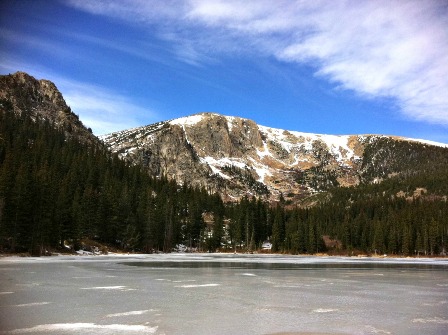
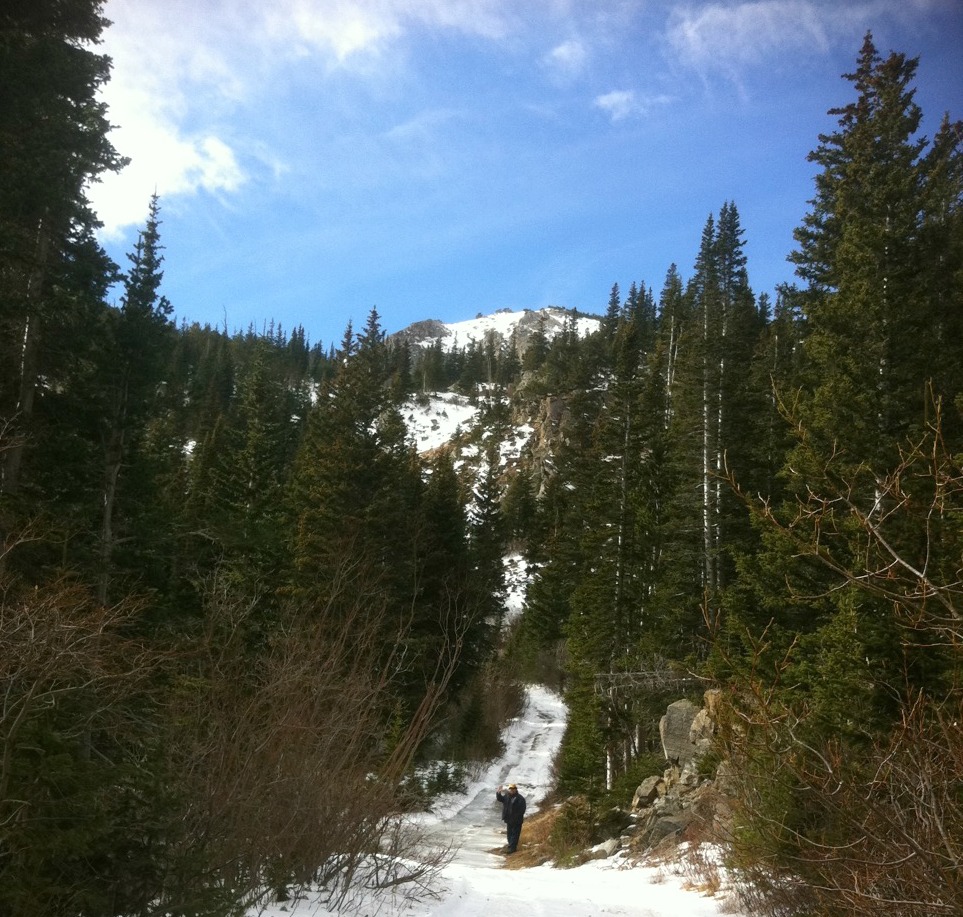
I don’t have all the answers yet. But I’ll leave you with a few photos I took while we were on our walk … showcasing the Colorado Rockies in transition. The gorgeous aspen leaves are all gone, but the lake isn’t completely frozen over. The snow is on the mountain and some of the trails, but water is still trickling through the waterfalls. Paradise to me.
If you want to read more of my writing, I send out the occasional newsletter. Sign up here:
Poetry and Irony
I was looking through some old writing files tonight and found a poem I wrote back in 2003. Sadly, it reminded me of the recent catastrophic flooding folks here in Colorado experienced last month. Isn’t it sad that sometimes everything you know has to be ripped away from you before you can begin to rebuild?
Bed Unmade
Drying, cracking, ribbon like,
a creek bed unvisited
by the very one who owns it.
Aching, looking, a young girl’s search
timelessness, quietness, seeping in.
Rocks and mold, age-old formations,
pebbles between her middle toes,
insects crawling among the lines.
Then rainfall arrived
and arrived, and stayed late;
foaming clay-mud swirls
filling a crisp canvas
and erased the lines
betrayed the ants
silenced the quiet
and swallowed the land,
unmade the bed,
sheets all torn
pillows swimming
only to slip back and taunt again.
If you want to read more of my writing, I send out the occasional newsletter. Sign up here:
My One-Year Report on Living Like Normal People
It’s been over a year now since we moved from our cozy log cabin, located at the top of a mountain in the Colorado Rockies, at 10,500 ft. above sea level, down to a mere 6,800 ft. in the foothills southwest of Denver.
This was supposed to be a one-year experiment with living without the dangerous driving conditions, the 5-ft. snowstorms, the year-round shoveling, the need for professional gear to take a walk around the neighborhood in February. It was intended to be a glimpse into things most people take for granted, things like a garage, trash service, newspaper delivery, a grocery store and gas station nearby, the certainty of running water and electricity. (Read about the move here.)
And it appeared to be the perfect compromise: Still living in a log-cabin-ish house, in a pine forest, with views of the Continental Divide if you squint to the west from our deck.
Sounds like a no-brainer, right?
For a normal person maybe.
For me, it’s been hell. I mean, don’t get me wrong … it’s an easy hell. A pretty comfortable hell. (Turns out, it’s no big deal to run out of toilet tissue down here. And the snow — get this — melts after a storm!) And my garden was lush and productive this year, unlike even our year we had a greenhouse up on the mountain, before the bear tore it down.
And yet, I’ve been in mourning.
It’s hard to put it into words, sometimes. Because it’s more than the hiking trails that were out my door, and the snow and the mountain view and the high-summer days that hit 75 at their warmest. (Did y’all know it gets damn hot down here in July? Especially with no air conditioning in a house?)
I miss the solitude and seclusion of my mountain. I miss neighbors that keep their distance and don’t freak about a dog that barks at herds of deer on occasion. (I’m particularly bitter about that one. See previous post. Animal Control and several certain people who live near here with their panties in a perpetual wad can kiss my aspens!)
Oh yeah. I miss the sound of aspen leaves shaking in the wind before they fall. And the silence. I miss that you can lie awake at night up there and not hear anything but your own breathing and maybe the stars moving up above. I miss how the raw world up there influenced my writing in ways foothills living just doesn’t do.
I miss the challenges of seemingly easy things, like getting to your front door in January after being gone all day and oh by the way there’s now 3 feet of snow there.
I miss how life at 10,500 ft. pushed me, every day, in new ways. I miss how alive that fresh, thin air up there makes me feel. I miss the creek and the lakes — they felt like ours alone. I miss evening walks when you didn’t have to worry about cars hitting you (only mountain lions out for dinner. And I can deal with mountain lions better than humans, most days.)
I even miss the nights when the electricity was out and it got so cold that we had to sleep in the great room by the woodstove, to make sure it kept burning all night so the pipes wouldn’t freeze.
If it were up to just me, we’d be back up on the mountain right now, enjoying the beginning of winter. But it’s not up to just me anymore. My husband likes it down here. My son misses the mountain, but he’s found a little tribe of friends down here at this neighborhood school, and his smiles are priceless. The commute to my new job from the old house would be painful. And let’s face it, moving is expensive.
So we’re staying through next summer at least. In the meantime, I have writer’s block when it comes to fiction writing, and the liquor store is only a few minutes away. Is this how Hemingway became an alcoholic?
Don’t answer that.
If you want to read more of my writing, I send out the occasional newsletter. Sign up here:
Fall in the Rockies = Bliss
Sometimes words just aren’t enough to express why I love Colorado and why it will be difficult for me to ever leave here and go back to Texas. Here are a few photos of the fall leaves that tell the story better than I can. These were taken just before the sun began to set in the foothills. Not as striking as mountain aspen photos that I used to be able to take outside my door at St. Mary’s Glacier, but these feed the soul, too, don’t ya think?
If you want to read more of my writing, I send out the occasional newsletter. Sign up here:


